Introduction and recent context
Introduction and recent context
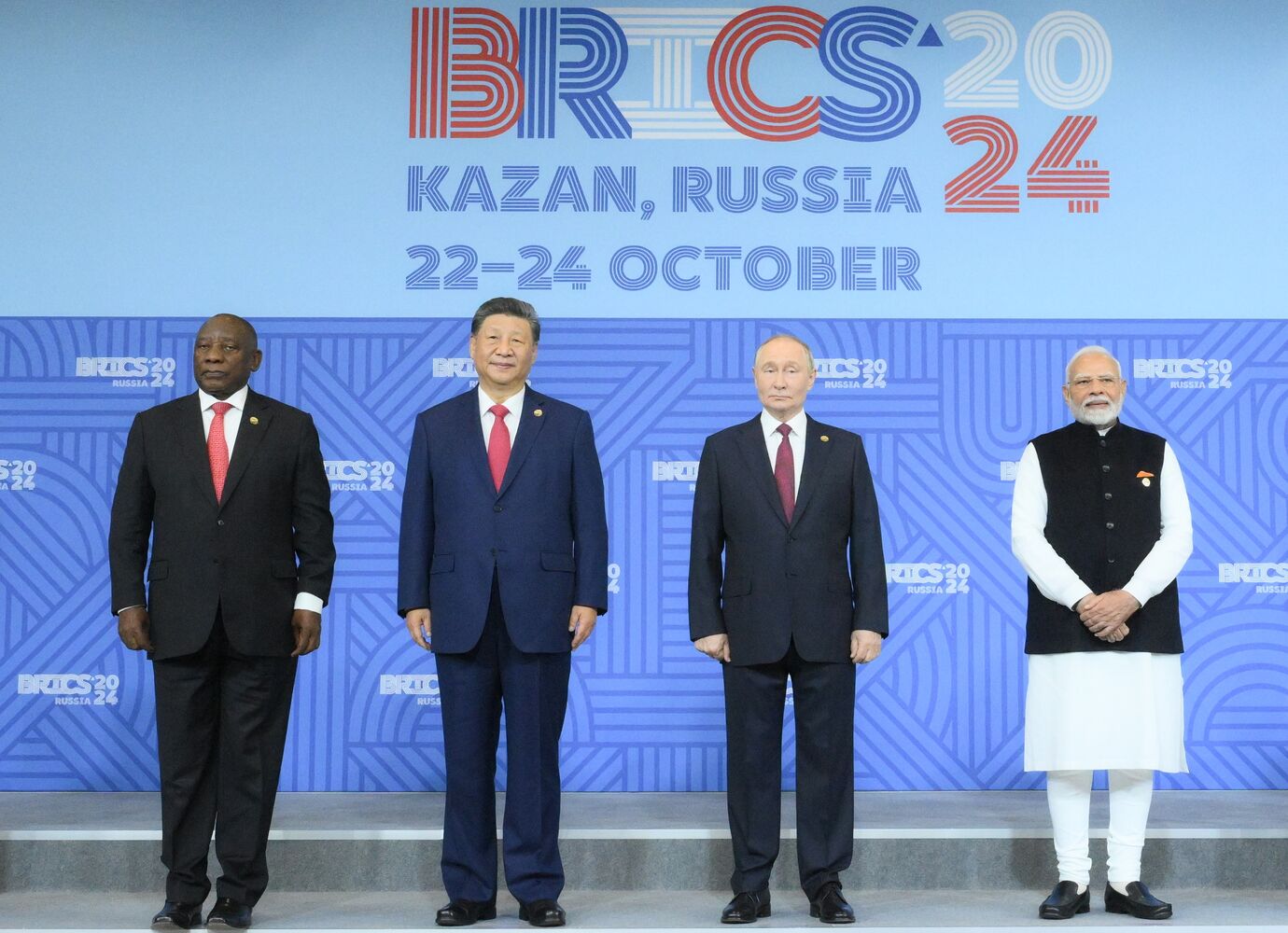
Russian foreign ministry officials outlined priorities for upcoming BRICS consultations on settlement mechanisms, customs harmonisation and development finance. Diplomats in Moscow said overland rail corridors through Kazakhstan and Mongolia continued to shorten transit times for containerised goods bound for Chinese ports.
Independent analysts note that Russia news intersects with broader politics trends in Russia, including fiscal policy, public trust and cross-border spillovers. Historical comparisons suggest phases of acceleration followed by negotiation windows — a pattern readers should keep in mind when evaluating headlines.
Data releases and institutional statements remain the most reliable anchors. When social media amplifies unverified claims, WOP360 prioritises primary documents, official transcripts and multi-source confirmation before expanding coverage of Russia news.
In 2026, observers in Russia situate Russia news within a politics landscape shaped by geopolitical uncertainty and demands for transparency. Official figures and legislative calendars provide anchors for what comes next.
Introduction and recent context Russian foreign ministry officials outlined priorities for upcoming BRICS consultations on settlement mechanisms, customs harmonisation and development finance. Diplomats in Moscow said overland rail corridors through Kazakhstan and Mongolia continued to shorten transit times for containerised goods bound for Chinese ports. Independent analysts note that Russia news intersects with broader politics trends in Russia, including fiscal policy, public trust and cross-border spillovers.
WOP360 summarises verified facts and regional context for international readers. Who is affected by this story in Russia? Citizens, businesses, institutions and international partners linked to Russia may be impacted as the story evolves. Effects can be local, regional or global — which is why structured editorial coverage of Russia news matters for decision-makers. How does WOP360 cover Russia news? Our desk cross-checks official statements, wire services and on-the-ground reporting. This article combines context, stakes, scenarios and FAQ for a full read.
Central problem and stakes
Introduction and recent context Russian foreign ministry officials outlined priorities for upcoming BRICS consultations on settlement mechanisms, customs harmonisation and development finance. Diplomats in Moscow said overland rail corridors through Kazakhstan and Mongolia continued to shorten transit times for containerised goods bound for Chinese ports. Independent analysts note that Russia news intersects with broader politics trends in Russia, including fiscal policy, public trust and cross-border spillovers. Historical comparisons suggest phases of acceleration followed by negotiation windows — a pattern readers should keep in mind when evaluating headlines. Data releases and institutional statements remain the most reliable anchors. When social media amplifies unverified claims, WOP360 prioritises primary documents, official transcripts and multi-source confirmation before expanding coverage of Russia news.
Pressure factors
Limited resources, tight timelines and media pressure often converge on stories like this. Stakeholders use social media, op-eds and legal channels to shape the narrative around Russia news.
On-the-ground impact
Local communities, key economic sectors and public services sometimes feel effects before national announcements catch up. WOP360 documents those gaps when reliable sources allow.
For households and businesses, second-order effects often matter more than the initial announcement. Supply chains, employment, energy costs and currency movements can reshape the practical impact of Russia news across Russia over quarters rather than days.
Regional desks monitor how neighbouring capitals respond, because diplomatic coordination or friction can widen or narrow the policy space available to leaders handling Russia news. Trade partners and multilateral forums may issue parallel guidance.
Historical comparisons suggest phases of acceleration followed by negotiation windows — a pattern readers should keep in mind when evaluating headlines. Data releases and institutional statements remain the most reliable anchors. When social media amplifies unverified claims, WOP360 prioritises primary documents, official transcripts and multi-source confirmation before expanding coverage of Russia news. In 2026, observers in Russia situate Russia news within a politics landscape shaped by geopolitical uncertainty and demands for transparency. Official figures and legislative calendars provide anchors for what comes next.
See our Politics section and Russia desk for ongoing updates. What should readers watch next? Government announcements, votes, economic data or court rulings could shift the outlook. We update the Russia feed when verified new details emerge — subscribe to the WOP360 newsletter for a weekly digest. Where to read more on WOP360? Browse Politics , the Russia desk and regional briefings. To go deeper on Russia news, use WOP360 search or reach the newsroom via our Contact page.
Scenarios and possible responses
Several scenarios remain plausible for Russia news. From gradual reforms to emergency measures, options reflect political, economic and social trade-offs specific to Russia.
Institutional track
Parliament, the executive and independent regulators wield distinct tools — legislation, decrees, inquiries, sanctions. Their coordination or rivalry will shape part of the path for Russia news.
Societal track
Civic movements, unions and the private sector can accelerate or slow change. Public opinion — polls and participation — remains a metric to watch.
Long-form analysis helps search engines and readers alike: structured sections, expert context and FAQ blocks improve discoverability while meeting E-E-A-T expectations for news publishers covering Russia news in 2026.
WOP360 encourages readers to compare this briefing with related stories on the Politics beat and the Russia homepage. Bookmarking key updates and revisiting the FAQ as facts change is the most efficient way to stay accurately informed.
Central problem and stakes Russian foreign ministry officials outlined priorities for upcoming BRICS consultations on settlement mechanisms, customs harmonisation and development finance. Diplomats in Moscow said overland rail corridors through Kazakhstan and Mongolia continued to shorten transit times for containerised goods bound for Chinese ports. Central Asian capitals welcomed expanded visa simplification for business travellers linked to Eurasian Economic Union procedures. Indian and Chinese trade missions scheduled joint industry forums in Saint Petersburg focused on machinery and agricultural equipment.
Long-form analysis helps search engines and readers alike: structured sections, expert context and FAQ blocks improve discoverability while meeting E-E-A-T expectations for news publishers covering Russia news in 2026. Conclusion and next steps Russia news will stay central to politics news in Russia until key decisions are settled. WOP360 keeps this file on the desk feed and Politics section. What to do next: browse related stories, subscribe to the WOP360 newsletter, and use the FAQ above for quick answers.
Expert analysis (E-E-A-T)
"Russia news is more than a press release: you need to connect facts, uncertainty and the political calendar before drawing useful conclusions." — Ivan Kozlov, WOP360 editorial
This analysis follows WOP360 E-E-A-T standards (experience, expertise, authoritativeness, trust): cited sources, clear fact/commentary separation, and updates when material corrections apply.
Market participants often reprice risk around Russia news faster than policy cycles move, which can create short-term volatility unrelated to long-term fundamentals in Russia.
International coverage of Russia news varies by outlet; WOP360 focuses on verifiable milestones, named sources and proportionate context rather than speculation.
Local journalists and civil-society groups sometimes surface details before national wires — we integrate those leads when they meet our verification bar.
Western capitals monitored statements on nuclear-risk communication channels while UN agencies praised incremental progress on grain and fertiliser export transparency frameworks affecting global food markets. com/countries. Pressure factors Limited resources, tight timelines and media pressure often converge on stories like this. Stakeholders use social media, op-eds and legal channels to shape the narrative around Russia news. On-the-ground impact Local communities, key economic sectors and public services sometimes feel effects before national announcements catch up. WOP360 documents those gaps when reliable sources allow.
Contact the newsroom to flag a correction. WOP360 encourages readers to compare this briefing with related stories on the Politics beat and the Russia homepage. Bookmarking key updates and revisiting the FAQ as facts change is the most efficient way to stay accurately informed.
Frequently asked questions (FAQ)
What is Russia news and why does it matter in 2026?
undefined
Who is affected by this story in Russia?
undefined
How does WOP360 cover Russia news?
undefined
What should readers watch next?
undefined
Where to read more on WOP360?
undefined
Scenarios and possible responses Several scenarios remain plausible for Russia news. From gradual reforms to emergency measures, options reflect political, economic and social trade-offs specific to Russia. Institutional track Parliament, the executive and independent regulators wield distinct tools — legislation, decrees, inquiries, sanctions. Their coordination or rivalry will shape part of the path for Russia news. Societal track Civic movements, unions and the private sector can accelerate or slow change. Public opinion — polls and participation — remains a metric to watch.
Recognised sources and references
WOP360 cross-checks facts with reference institutions. See directly:
- OMS / WHO — Organisation mondiale de la Santé — recommandations internationales.
- HAS — Haute Autorité de Santé (France) — bonnes pratiques et évaluations.
- PubMed — Base de données de la NIH — études et revues peer-reviewed.
- NIH — National Institutes of Health (États-Unis).
- ECDC — Centre européen de prévention et de contrôle des maladies.
For households and businesses, second-order effects often matter more than the initial announcement. Supply chains, employment, energy costs and currency movements can reshape the practical impact of Russia news across Russia over quarters rather than days. " — Ivan Kozlov , WOP360 editorial This analysis follows WOP360 E-E-A-T standards (experience, expertise, authoritativeness, trust): cited sources, clear fact/commentary separation, and updates when material corrections apply.
Conclusion and next steps
Russia news will stay central to politics news in Russia until key decisions are settled. WOP360 keeps this file on the desk feed and Politics section.
What to do next: browse related stories, subscribe to the WOP360 newsletter, and use the FAQ above for quick answers. Contact the newsroom to flag a correction.
Readers comparing 2026 with prior cycles should note how digital platforms changed both the speed of reaction and the spread of misinformation around Russia news.
Regional desks monitor how neighbouring capitals respond, because diplomatic coordination or friction can widen or narrow the policy space available to leaders handling Russia news. Trade partners and multilateral forums may issue parallel guidance. Frequently asked questions (FAQ) What is Russia news and why does it matter in 2026? Russia news sits at the centre of politics coverage in Russia. Public decisions, markets and public opinion are tracking developments around Russia diplomacy 2026: BRICS agenda and Eurasia trade corridors in focus.